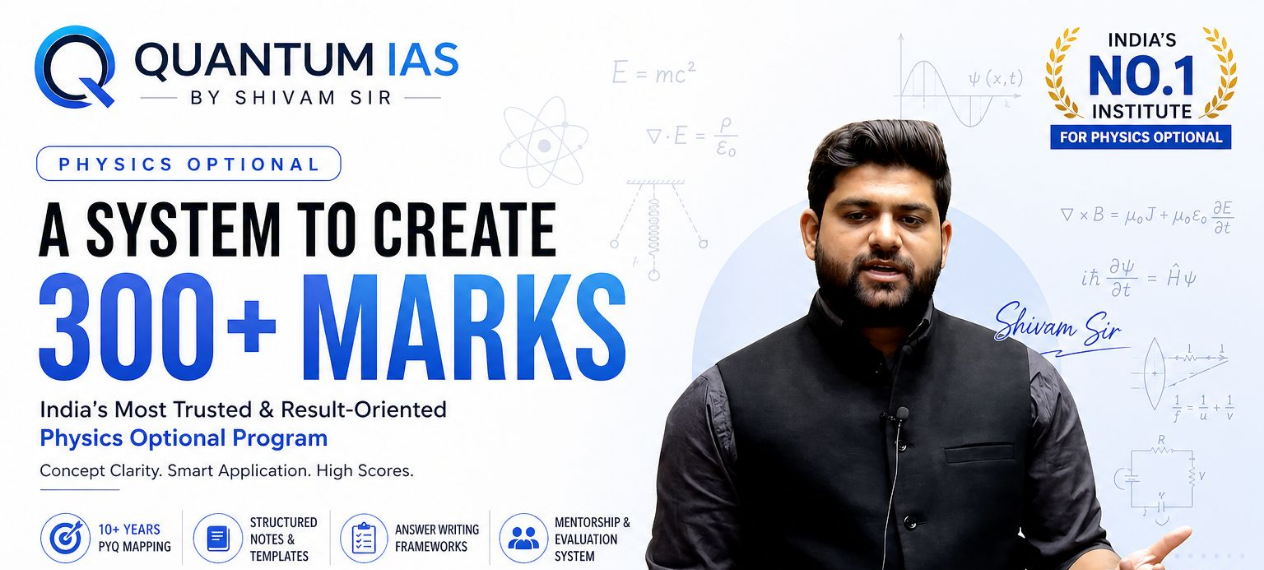
Choosing Physics Optional for UPSC 2026 can be a strategic decision for aspirants with a strong analytical background. Physics is known for its scoring potential, objectivity, and clarity, making it a preferred optional subject among science graduates.
However, success requires a structured strategy, consistency, and proper guidance. This article provides a complete roadmap to help you prepare Physics Optional effectively and maximize your score in UPSC CSE 2026.
1. Understand the Physics Optional Syllabus
Before starting preparation, thoroughly analyze the syllabus.
Paper I:
- Mechanics
- Waves and Optics
- Electricity and Magnetism
Paper II:
- Thermodynamics
- Quantum Mechanics
- Nuclear Physics
- Electronics
Break the syllabus into smaller topics and track your progress regularly.
2. Choose the Right Study Material
Use limited and standard books to avoid confusion.
- Classical Mechanics – H.C. Verma / D.S. Mathur
- Electrodynamics – Griffiths
- Quantum Mechanics – David J. Griffiths
- Thermodynamics – Zemansky
Avoid collecting multiple resources. Focus more on revision and clarity.
3. Build Strong Conceptual Clarity
Physics Optional requires a clear understanding of concepts and their application.
- Focus on derivations
- Understand formulas instead of memorizing
- Practice numerical problems regularly
If your basics are weak, begin with NCERT textbooks and fundamental concepts.
4. Practice Answer Writing Regularly
Answer writing is a critical part of preparation.
- Write answers in a structured format
- Use diagrams wherever relevant
- Practice previous year questions
Try to solve at least 10 to 15 questions daily to build speed and accuracy.
5. Solve Previous Year Papers
Previous year questions help you understand the exam pattern and important topics.
- Analyze the last 20 to 25 years of papers
- Identify recurring concepts
- Practice writing answers within time limits
This will improve both confidence and performance.
6. Create a Smart Study Plan
A well-structured plan is essential for effective preparation.
Suggested Timeline:
- 4 to 5 months for syllabus completion
- 2 months for revision and testing
Daily Plan:
- 4 to 5 hours for Physics Optional
- 2 hours for revision
- 1 hour for answer writing or PYQs
Consistency is more important than the number of hours studied.
7. Join Test Series and Get Feedback
A good test series helps in evaluating your preparation.
- Improve answer writing skills
- Learn time management
- Identify weak areas
Always review your mistakes and work on them.
8. Learn from Toppers’ Strategy
Successful candidates generally follow a similar approach:
- Limited resources
- Multiple revisions
- Regular answer writing practice
- Strong conceptual clarity
Focus on depth rather than covering too many sources.
Common Mistakes to Avoid
- Ignoring answer writing practice
- Lack of regular revision
- Using too many study materials
- Not practicing previous year questions
Final Strategy Summary
To prepare Physics Optional effectively for UPSC 2026:
- Understand the syllabus thoroughly
- Focus on conceptual clarity
- Practice numerical problems daily
- Write answers consistently
- Revise multiple times
Conclusion
Physics Optional can be a high-scoring subject in UPSC 2026 if approached with the right strategy. With disciplined preparation, consistent practice, and proper guidance, achieving a score of 280 to 320 marks is possible.